Classroom management plans‚ often available as a PDF‚ are crucial for establishing a productive learning environment.
These plans detail preventive‚ supportive‚ and corrective strategies for optimal student behavior.
What is a Classroom Management Plan?
A classroom management plan‚ frequently found as a downloadable PDF document‚ is a meticulously crafted blueprint designed to foster a positive and productive learning atmosphere. It’s more than just a list of rules; it’s a comprehensive system outlining expectations‚ routines‚ and consequences. These plans proactively address potential behavioral challenges‚ ensuring a focused environment conducive to academic success.
Effective plans‚ like those exemplified in templates and examples‚ detail procedures for everything from entering and exiting the classroom to transitioning between activities. They often incorporate positive reinforcement systems‚ such as ClassDojo‚ and clearly define consequences for misbehavior. A well-defined plan‚ such as Shanti Bowen’s 11th-grade example‚ provides structure and consistency‚ benefiting both teachers and students.
Why is a Classroom Management Plan Important?
A robust classroom management plan‚ often accessible as a PDF template‚ is fundamentally important for maximizing instructional time and creating a safe‚ respectful learning environment. Without a plan‚ classrooms can quickly descend into chaos‚ hindering student progress and teacher effectiveness. These plans proactively minimize disruptions‚ allowing educators to focus on teaching and students to concentrate on learning.
Having a documented plan‚ like the examples available online‚ ensures consistency in expectations and consequences. It also facilitates clear communication with students‚ parents‚ and administrators. Utilizing resources like classroom matrices and scripted prompts‚ found within comprehensive PDF guides‚ supports positive behavior and reduces reactive discipline. Ultimately‚ a well-implemented plan fosters a positive classroom culture.
Key Components of a Classroom Management Plan
PDF examples reveal key components: clear rules‚ positive reinforcement systems (like ClassDojo)‚ consequences‚ and proactive strategies to prevent misbehavior effectively.
Classroom Rules and Expectations
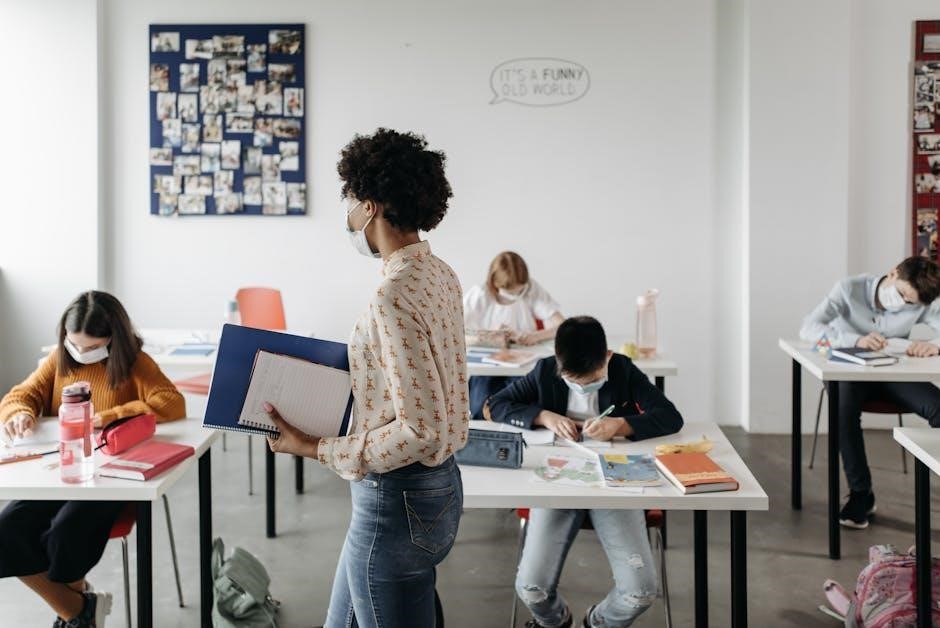
Classroom rules‚ detailed in PDF management plan examples‚ form the foundation of a well-ordered learning space. These expectations‚ often posted for visibility‚ guide student conduct and promote a respectful atmosphere. Shanti Bowen’s 11th-grade plan exemplifies this‚ outlining specific behavioral guidelines.
Effective rules are typically concise‚ positively stated‚ and consistently enforced. A PDF template will often include space to define these expectations clearly. Examples include respecting others‚ actively participating‚ and arriving prepared. Establishing these upfront minimizes disruptions and maximizes instructional time. Clear expectations‚ coupled with consistent application‚ are vital for a successful classroom environment‚ as highlighted in numerous downloadable plan resources.
Positive Reinforcement Systems
Positive reinforcement‚ a key component detailed in many classroom management plan PDF examples‚ encourages desired behaviors. Systems like ClassDojo are frequently cited as effective tools for recognizing and rewarding positive actions. These platforms allow teachers to award points or badges for demonstrating expected conduct‚ fostering a positive classroom culture.
A well-defined plan‚ often outlined in a PDF template‚ will specify the criteria for earning rewards. This could include participation‚ completing assignments‚ or demonstrating kindness. Consistent application of positive reinforcement motivates students and reinforces desired behaviors. The goal is to create an environment where students are recognized and appreciated for their positive contributions‚ as preventative strategies emphasize.
Consequences for Misbehavior
A comprehensive classroom management plan PDF invariably includes a clearly defined system of consequences for misbehavior. These consequences should be logical‚ consistent‚ and age-appropriate‚ escalating in severity for repeated or more serious offenses. The plan outlines corrective strategies‚ moving from minor interventions like verbal warnings to more significant actions.
Effective plans‚ as seen in examples‚ emphasize that consequences are not punitive but rather opportunities for learning and behavior correction. Documentation of misbehavior and interventions is often recommended within the PDF template. Consistency in applying consequences is paramount‚ ensuring fairness and predictability for all students‚ supporting a structured learning environment.
Proactive Strategies for Prevention
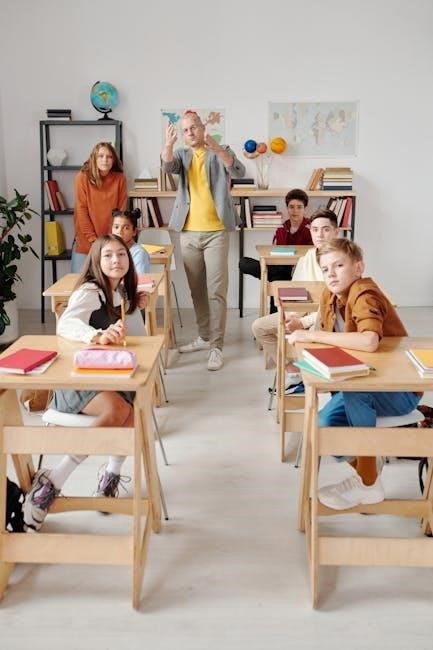
A well-structured classroom management plan PDF prioritizes proactive strategies to prevent misbehavior before it occurs. These strategies‚ central to effective classroom environments‚ include establishing clear expectations and routines‚ readily available within the plan’s documentation. Utilizing tools like ClassDojo‚ as suggested in resources‚ proactively reinforces positive behaviors.
The PDF template often encourages teachers to script prompts and reminders for desired behaviors‚ minimizing disruptions. Creating a positive classroom climate through engaging lessons and building rapport with students are also key preventative measures. By focusing on prevention‚ teachers reduce the need for reactive disciplinary actions‚ fostering a more conducive learning atmosphere.
Developing Your Classroom Management Plan
Classroom management plan PDF development involves defining your teaching philosophy and identifying potential challenges‚ then setting realistic goals for student conduct and success.
Defining Your Teaching Philosophy
Your teaching philosophy forms the bedrock of your classroom management plan‚ often documented within a comprehensive PDF template. Consider your core beliefs about learning and student development. Do you prioritize a student-centered‚ collaborative approach‚ or a more structured‚ teacher-directed model?
A well-defined philosophy guides your expectations and responses to student behavior. It informs the proactive strategies you employ‚ like establishing clear routines and fostering a positive classroom climate. Reflect on how you view discipline – as corrective or preventative?
Understanding your values ensures consistency in applying rules and consequences‚ as outlined in your classroom management plan PDF. This clarity communicates respect and fairness to students‚ building trust and encouraging responsible behavior.
Identifying Potential Challenges
Before finalizing your classroom management plan – often structured as a detailed PDF – proactively identify potential behavioral challenges. Consider factors like student age‚ developmental levels‚ and the specific dynamics of your classroom. Anticipate common issues such as disruptive behavior‚ difficulty with transitions‚ or lack of engagement.
Review past experiences and consult with colleagues to gain insights into recurring problems. Think about students with Individualized Education Programs (IEPs) or those requiring specific accommodations.
Acknowledging these potential hurdles allows you to develop targeted strategies within your PDF plan. This proactive approach minimizes disruptions and maximizes learning time‚ creating a more positive and productive classroom environment for everyone.
Setting Realistic Goals
When crafting your classroom management plan – frequently documented as a comprehensive PDF – establish goals that are both ambitious and attainable. Avoid overly idealistic expectations that may lead to frustration. Instead‚ focus on incremental improvements in student behavior and classroom climate.
Begin with a few key areas for improvement‚ such as reducing off-task conversations or increasing participation. Ensure goals are specific‚ measurable‚ achievable‚ relevant‚ and time-bound (SMART).
Regularly revisit and adjust these goals based on observed progress; A well-defined PDF plan should outline these objectives‚ providing a clear roadmap for fostering a positive and productive learning environment.
Creating a Classroom Matrix
A central component of many classroom management plan examples‚ often found as a downloadable PDF‚ is the classroom matrix. This visual tool clearly defines expected behaviors across various classroom settings and routines.
The matrix typically lists common activities (e.g.‚ group work‚ independent reading‚ transitions) along one axis and core values or rules (e.g.‚ respect‚ responsibility‚ safety) along the other.
Each cell within the matrix details what specific behaviors demonstrate adherence to the rule during that activity. A well-constructed matrix‚ included in your PDF plan‚ serves as a constant visual reminder for both students and the teacher‚ promoting consistency and clarity.
Specific Strategies & Techniques
Classroom management plan examples‚ often in PDF format‚ highlight techniques like concise instructions‚ positive reinforcement via platforms like ClassDojo‚ and non-verbal cues.
Effective Communication Techniques
Effective communication‚ as detailed in many classroom management plan examples (often found as a PDF)‚ is paramount for a well-managed classroom. These plans emphasize the importance of giving concise and clear instructions to students‚ minimizing ambiguity and potential for misinterpretation.
Furthermore‚ successful plans often incorporate scripting prompts and reminders for desired behaviors‚ ensuring consistency in messaging. Shanti Bowen’s 11th-grade example demonstrates using humor – an attention signal with jokes – as a unique communication strategy.
Positive communication‚ like praise for good behavior‚ is also highlighted‚ alongside clear expectations for student conduct. A well-defined plan ensures teachers communicate proactively and responsively‚ fostering a respectful learning environment.
Non-Verbal Cues and Body Language
Many classroom management plan examples‚ readily available as a PDF‚ underscore the significance of non-verbal communication. These plans often outline how teachers can utilize body language to reinforce expectations and manage student behavior effectively. Maintaining eye contact‚ using purposeful gestures‚ and proximity control are frequently recommended techniques.
Shanti Bowen’s 11th-grade plan‚ for instance‚ implicitly relies on the teacher’s presence and demeanor to support classroom rules. A comprehensive plan details how these cues complement verbal instructions‚ creating a consistent and understandable message for students.
Effective body language minimizes disruptions and fosters a positive learning atmosphere‚ contributing to a proactive classroom management approach.
Transition Strategies
A well-defined classroom management plan example‚ often found as a PDF document‚ dedicates sections to smooth transitions between activities. These plans recognize transitions as potential disruption points and offer strategies to minimize off-task behavior. Clear signals‚ pre-determined routines‚ and consistent expectations are key components.
Templates emphasize outlining specific procedures for moving from one task to another‚ including material preparation and student movement. The classroom management plan outlines routines and procedures for transitioning between activities.
Effective transition strategies‚ detailed in these plans‚ maximize instructional time and maintain a focused learning environment‚ ultimately contributing to a more productive classroom.
Attention-Getting Signals
Many classroom management plan examples‚ readily available as a PDF‚ highlight the importance of established attention-getting signals. These signals serve as non-verbal cues to quickly refocus student attention without disruptive verbal commands. Consistency is paramount for effectiveness; students must learn to respond predictably.
One example‚ detailed in plans by educators like Shanti Bowen‚ utilizes humor – a joke – as an attention signal for an 11th-grade classroom. Other plans suggest a raised hand‚ a chime‚ or a specific phrase.
The classroom management plan outlines these signals‚ ensuring all students understand the expectation to immediately cease current activity and direct their focus to the teacher.
Tools and Resources for Implementation
Classroom management plan examples‚ often in PDF format‚ suggest platforms like ClassDojo and readily available templates to aid successful implementation and tracking.
ClassDojo and Similar Platforms
ClassDojo emerges as a frequently cited tool within classroom management plan examples‚ often found as PDF resources. It facilitates positive reinforcement by allowing teachers to award points for desired behaviors‚ fostering a positive classroom climate. These platforms streamline communication with parents‚ providing updates on student progress and behavior.
Beyond ClassDojo‚ other platforms offer similar functionalities‚ including behavior tracking‚ reward systems‚ and parent communication features. Utilizing these digital tools can significantly enhance the efficiency of implementing a classroom management plan. Many PDF templates recommend integrating such platforms to proactively manage student conduct and encourage positive participation. The preventative strategies outlined in plans often leverage these tools for immediate feedback and consistent reinforcement.
Utilizing a Classroom Management Plan Template (PDF)
A classroom management plan template‚ readily available as a PDF‚ provides a structured framework for educators. These templates typically include sections for defining classroom rules‚ outlining consequences‚ and establishing positive reinforcement systems. They often feature a classroom matrix to visually represent expected behaviors across various settings.
Downloading a PDF template streamlines the planning process‚ offering a pre-designed format that can be customized to fit specific classroom needs. Resources like those from the Center on PBIS offer comprehensive templates. These templates encourage proactive planning‚ including scripting prompts and creating lesson plans to explicitly teach expected behaviors‚ ensuring a consistent and effective approach to classroom management.
Lesson Plans for Teaching Expected Behavior
Effective classroom management isn’t simply about reacting to misbehavior; it’s proactively teaching desired conduct. A classroom management plan example PDF often emphasizes the importance of dedicated lesson plans focused on explicitly instructing students on expected behaviors. These lessons should clearly define what appropriate conduct looks like in various classroom scenarios.
Templates‚ like those offered by PBIS‚ include opportunities to develop these lessons. They should incorporate modeling‚ role-playing‚ and positive reinforcement to solidify understanding. Consistent practice and review are key. By directly teaching expectations‚ educators minimize ambiguity and create a shared understanding of behavioral norms‚ fostering a more positive learning environment.
Scripting Prompts and Reminders
A well-developed classroom management plan example PDF frequently highlights the value of pre-written prompts and reminders. These scripts serve as consistent‚ clear cues for students‚ minimizing ambiguity and maximizing effectiveness. Instead of reacting in the moment‚ teachers can utilize prepared phrases to redirect behavior or reinforce expectations.
For instance‚ a script for transitioning between activities might be: “Eyes on me‚ voices off. When you’re ready‚ quietly begin the next task.” Templates often include sections for creating these scripts. Consistent use of these prompts‚ coupled with positive reinforcement‚ helps students internalize desired behaviors and reduces disruptive incidents‚ fostering a smoother classroom flow.

Monitoring and Evaluation
Classroom management plan example PDFs emphasize data collection to analyze student behavior patterns. This allows teachers to adjust strategies for continuous improvement and effectiveness.
Data Collection Methods
Classroom management plan example PDFs frequently highlight the importance of systematic data collection for effective monitoring. Teachers can employ various methods to track student behavior and assess plan efficacy. Observational checklists are useful for noting the frequency of specific behaviors‚ both positive and negative‚ throughout the day.
Tally marks or brief anecdotal notes can quickly capture instances of rule-following or misbehavior. Furthermore‚ utilizing platforms like ClassDojo provides digital records of behavior points awarded or deducted. Reviewing assignment completion rates and student work samples can also offer insights into engagement and potential behavioral triggers.

Regularly analyzing this collected data allows educators to identify trends‚ pinpoint areas needing adjustment‚ and ultimately refine their classroom management approach.
Analyzing Student Behavior Patterns
Classroom management plan example PDFs emphasize that collected data is only valuable when thoroughly analyzed. Identifying patterns in student behavior is key to proactive intervention. Look for recurring times of day when misbehavior spikes‚ or specific activities that consistently trigger disruptions.
Consider whether certain students exhibit similar behavioral challenges‚ suggesting a need for targeted group interventions. Analyzing data from tools like ClassDojo can reveal trends in positive reinforcement effectiveness.
Are certain rewards more motivating than others? Furthermore‚ examine if behavioral issues correlate with academic struggles or social dynamics. This deeper understanding informs adjustments to the plan‚ ensuring it addresses root causes rather than just symptoms.
Adjusting the Plan Based on Results
Classroom management plan example PDFs highlight the importance of flexibility; a plan isn’t static. Data analysis reveals what’s working and what isn’t‚ necessitating adjustments. If a consequence isn’t deterring misbehavior‚ modify or replace it. Similarly‚ if a positive reinforcement system yields limited results‚ explore alternative rewards.
Consider if proactive strategies are truly preventing issues‚ or if they require refinement. Perhaps transition strategies need streamlining‚ or communication techniques require improvement.
Regularly revisit your teaching philosophy and ensure the plan aligns with it. Document all changes and the rationale behind them‚ creating a living document that evolves with your students’ needs.
Example Plan Sections (Based on Available Information)
Classroom management plan example PDFs often include sections detailing routines for entering/exiting‚ transitioning‚ and specific grade-level strategies‚ like Shanti Bowen’s 11th-grade plan.
Entering and Exiting Procedures
Classroom management plan example PDFs consistently emphasize clearly defined entry and exit procedures as foundational elements. Upon entering‚ students might be expected to immediately begin a designated “bell ringer” activity‚ quietly reviewing previously learned material or preparing for the day’s lesson. This minimizes disruptive chatter and maximizes instructional time from the outset.
Exit procedures are equally important. A PDF template will often suggest a systematic approach‚ such as students organizing their materials‚ pushing in chairs‚ and waiting for dismissal by row or table group. This ensures a calm and orderly departure‚ preventing a chaotic rush to the door. These routines‚ when consistently enforced‚ contribute significantly to a well-managed classroom environment.
Transitioning Between Activities
Classroom management plan example PDFs frequently dedicate sections to smooth transitions‚ recognizing them as potential disruption points. Effective plans outline specific procedures for moving from one activity to another‚ minimizing wasted time and maintaining student focus. These might include a designated signal – a chime‚ a raised hand‚ or a verbal cue – to indicate the transition is beginning.
A well-defined process could involve students immediately putting away current materials‚ gathering necessary supplies for the next activity‚ and quietly awaiting further instructions. PDF templates often suggest practicing these transitions repeatedly until they become automatic. Consistent routines and clear expectations are key to preventing chaos during these shifts in learning focus.
11th Grade Classroom Management Example (Shanti Bowen)
Shanti Bowen’s 11th-grade classroom management plan example‚ often found within comprehensive PDF resources‚ emphasizes a proactive approach. Her plan details posted rules for student conduct‚ fostering a clear understanding of expectations. A unique element is the use of jokes as an attention signal‚ creating a positive classroom atmosphere while efficiently regaining focus.
The PDF example highlights expectations for various classroom activities‚ ensuring students know what is expected during different learning phases. Bowen’s approach prioritizes clear communication and consistent enforcement of rules. This detailed plan serves as a valuable model for educators seeking to implement effective strategies for managing older students and promoting a respectful learning environment.
Advanced Considerations
Classroom management plan examples‚ often in PDF format‚ should address individual student needs and foster collaboration with parents for long-term success.
Addressing Individual Student Needs
Classroom management plan examples‚ frequently found as a PDF resource‚ must acknowledge that a one-size-fits-all approach is ineffective. Students arrive with diverse backgrounds‚ learning styles‚ and behavioral patterns. A robust plan incorporates strategies for differentiation‚ recognizing that some students may require modified expectations or additional support.
Consider students with Individualized Education Programs (IEPs) or 504 plans‚ ensuring the classroom management system aligns with their specific accommodations. Proactive measures‚ like preferential seating or check-ins‚ can prevent disruptive behaviors. Flexibility is key; a successful plan isn’t rigid but adapts to meet the evolving needs of each learner‚ fostering an inclusive and supportive classroom environment.
Collaboration with Parents and Guardians
A comprehensive classroom management plan example‚ often available as a PDF‚ emphasizes the vital role of parent-guardian partnerships. Open communication builds trust and ensures consistency between home and school. Regularly share the plan’s key components – rules‚ expectations‚ and consequences – with families.
Proactive outreach‚ such as newsletters or parent-teacher conferences‚ facilitates a collaborative approach to addressing behavioral concerns. When challenges arise‚ involve parents early in the problem-solving process. Seeking their insights and working together to develop strategies demonstrates a commitment to the student’s overall well-being and fosters a unified support system for positive behavior.
Dealing with Challenging Behaviors
A well-defined classroom management plan example‚ frequently found as a PDF resource‚ outlines strategies for addressing disruptive behaviors. These plans prioritize understanding the function of the behavior – what need is the student trying to meet? – before implementing consequences.
Effective responses range from non-verbal cues and redirection to implementing pre-determined consequences outlined in the plan. Consistency is key. The plan should also detail procedures for escalating concerns‚ involving support staff‚ and documenting incidents. Prioritizing de-escalation techniques and restorative practices fosters a safe and supportive learning environment‚ even when addressing significant behavioral challenges.
Long-Term Sustainability of the Plan
The longevity of a classroom management plan‚ often documented as a PDF‚ hinges on consistent implementation and periodic review. A successful plan isn’t static; it requires ongoing monitoring and adjustments based on student needs and classroom dynamics. Regularly collecting data on behavior patterns – as suggested by resources – informs these refinements.

Furthermore‚ building buy-in from students and fostering a collaborative classroom culture are vital. The plan should be revisited at the start of each academic year‚ and potentially mid-year‚ to ensure it remains relevant and effective. This proactive approach guarantees the plan’s continued success and positive impact on the learning environment.